Web Design Trends Kenyan Businesses Should Adopt in 2026
The web design trends Kenyan businesses should adopt in 2026 are mobile-first speed optimisation, WhatsApp and AI chatbot integration, M-Pesa payment experience improvements, minimalist high-contrast design, prominent social proof, and accessibility improvements. These are not aesthetic trends — they are functional upgrades that directly impact Google rankings, customer trust, and conversion rates in the Kenyan market.
Not every global web design trend is relevant to the Kenyan market. A glassmorphism hero section is impressive on a fast fibre connection — but on a Safaricom 4G connection in Nairobi CBD at 6pm, it turns into an abandoned tab. The trends that matter for Kenyan businesses are those that improve real-world performance for the actual devices and connections your customers use.
8 Web Design Trends That Actually Matter for Kenyan Businesses in 2026
Mobile-First, Speed-Obsessed Design
82% of Kenyan internet sessions are on mobile. Websites still designed "desktop-first" are losing this audience to competitors. In 2026, the standard is building for a 375px screen first — larger viewports are the enhancement, not the base. Every image is WebP, every animation is GPU-composited, and the PageSpeed score on mobile is above 85. This is not optional — it is a direct Google ranking signal.
Example: A Nairobi salon client cut mobile load time from 6.1s to 1.9s after a rebuild and saw a 34% increase in booking form completions within 6 weeks.
WhatsApp Integration Everywhere
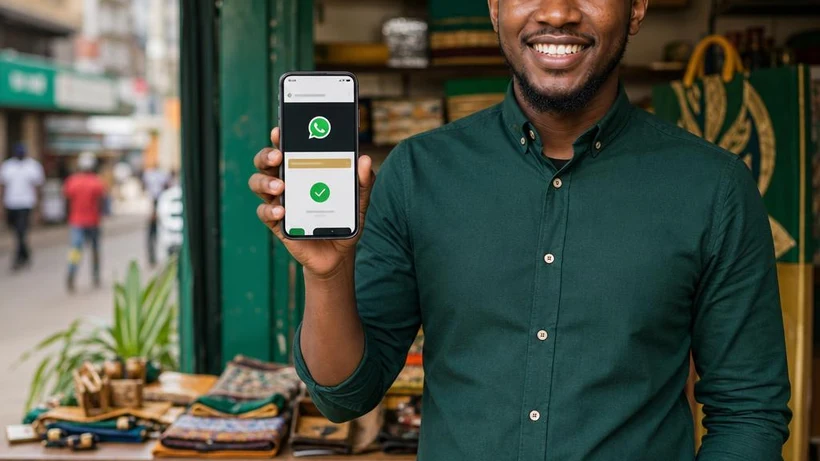
A floating WhatsApp button is now the standard for any Kenyan business website — but leading businesses are going further. WhatsApp click-to-chat links in the header, pre-filled message templates ("I would like a quote for..."), and WhatsApp-powered contact forms all reduce the friction between a website visitor and a sales conversation. The businesses doing this well are converting 40–60% more website visitors into leads.
AI Chatbots for 24/7 Enquiry Handling
More Nairobi businesses are deploying AI chatbots on their websites that can answer customer questions, qualify leads, and collect contact details at 2am when no one is in the office. Unlike scripted chatbots from 2019, modern AI chatbots understand natural language, handle follow-up questions, and hand off to a human salesperson when the lead is ready to buy. The cost has dropped to under KSh 5,000/month for a capable implementation. See our full breakdown of AI chatbots for Kenyan businesses for setup options and pricing.
Frictionless M-Pesa Payment Experiences
The trend is not just having M-Pesa — it is making it the default and most prominent option. Leading Kenyan e-commerce sites are removing card payment as the hero option and placing M-Pesa first. They pre-fill the phone number field, send instant payment confirmations via SMS and WhatsApp, and show real-time inventory counts that create purchase urgency. These checkout optimisations typically increase completed purchase rates by 15–25%. Learn more about e-commerce websites with M-Pesa (Daraja API) integration.
Prominent Social Proof with Real Numbers
Kenyan consumers are increasingly sceptical of vague claims. "Quality service" and "trusted by hundreds" are ignored. What works in 2026 is specific, verifiable social proof: "4.9/5 from 47 Google reviews", "200+ projects delivered since 2019", "clients in 23 counties". Embedding your actual Google review widget — so visitors can click through and verify the reviews themselves — has become a major trust signal for Nairobi consumers.
Minimalist Design with Large, Bold Typography
After years of websites crammed with animations, pop-ups, and widgets, Kenyan consumers are rewarding restraint. Clean white space, large headline text (48px+), a single strong colour accent, and fast loading times outperform complex, "busy" designs in both time-on-site and conversion rate. Less is more — particularly on mobile.
AI-Optimised Content Structure for Google AI Overviews
Google's AI Overviews and ChatGPT citations are changing how Kenyan consumers discover businesses. Websites structured with clear questions and answers (FAQ sections with schema markup), direct answer-first paragraphs, and factual entity information are more likely to be cited by AI systems. This is no longer future-proofing — it is present-day competitive advantage for Nairobi businesses investing in content now. Read our related guide on SEO and Answer Engine Optimisation (AEO).
Flexible Payment Messaging ("Lipa Mdogo Mdogo")
With Kenya's high cost of living pressure in 2026, businesses that offer and prominently display instalment payment options on their websites are converting buyers who would otherwise delay purchase. "From KSh 5,000/month" is more compelling than "KSh 35,000" for the same product. Adding a payment calculator or instalment plan explainer page consistently increases quote requests from price-sensitive Kenyan buyers.
2023 Website Standard vs. 2026 Website Standard
| Website feature | 2023 standard | 2026 standard |
|---|---|---|
| Design approach | Desktop-first, adapted for mobile | Mobile-first, desktop is the enhancement |
| Customer contact | Contact form only | WhatsApp click-to-chat + AI chatbot + form |
| Payments | Card payment shown first, M-Pesa optional | M-Pesa first, pre-filled phone number field |
| Trust signals | Generic testimonials text block | Live, clickable Google review widget with real ratings |
| Page speed (mobile) | PageSpeed score 40–60 | PageSpeed score 85+ |
| Content structure | Long unstructured paragraphs | FAQ schema, answer-first paragraphs, AI-citation ready |
Key Takeaways
- Mobile-first performance is a ranking factor, not a design preference — aim for a mobile PageSpeed score above 85.
- WhatsApp and AI chatbots close the gap between a visitor and a sales conversation, often lifting leads by 40–60%.
- M-Pesa should be the default, pre-filled payment option, not an afterthought next to card payment.
- Specific, verifiable social proof (real ratings, real numbers) beats vague trust language every time.
- FAQ schema and answer-first content improve visibility in Google AI Overviews and chatbot citations.
Frequently Asked Questions
Straight answers to what Nairobi business owners ask us most about web design in 2026.
What current web design trends should local Kenyan businesses adopt to stay competitive online?
Kenyan businesses should prioritise: mobile-first speed-optimised design, WhatsApp integration throughout the site, AI chatbots for 24/7 lead handling, M-Pesa as the primary payment option, minimalist bold typography, prominent verifiable social proof (real Google review ratings), and AI-optimised content with FAQ schema for Google AI Overviews visibility.
How much does a modern website cost for a business in Kenya in 2026?
A modern business website in Kenya costs from KSh 25,000 for a basic informational site to KSh 60,000 to 150,000 for a full e-commerce store with M-Pesa integration. Kissor Digital offers web design packages from KSh 25,000 with a Lipa Mdogo Mdogo flexible instalment option. See our full pricing page for package details.
Do Kenyan businesses need a website if they are already on social media?
Yes. Social media depends on third-party platforms with algorithms you do not control. A website is an owned asset that ranks on Google, accepts payments directly, and builds credibility that social profiles cannot match. Successful Kenyan businesses use social media for reach and engagement, and a website for conversion and long-term SEO.
Should a Kenyan business website have dark mode in 2026?
Dark mode is useful for technology companies and creative agencies targeting younger urban consumers, but for most Kenyan small businesses, investing in mobile speed, clear contact information, and M-Pesa integration will deliver far more business value than dark mode implementation.
How long does it take to redesign a business website in Kenya?
A standard 5–8 page business website redesign typically takes 2 to 3 weeks from content collection to launch, provided the client supplies logo, images, and copy promptly. E-commerce builds with M-Pesa and inventory setup usually take 4 to 6 weeks. Kissor Digital provides a fixed project timeline with milestones at the start of every engagement.
Will a mobile-first redesign hurt my Google ranking during the transition?
A properly executed redesign should not cause a lasting ranking drop. The key is preserving your URL structure or setting up 301 redirects, keeping core page content and keywords intact, resubmitting your sitemap to Google Search Console after launch, and monitoring Core Web Vitals for the first two weeks. Sites that skip redirects or lose indexed content are the ones that see ranking drops — not the redesign itself.
Can I add M-Pesa payments to my existing website without a full redesign?
Yes. M-Pesa STK Push (Daraja API) integration can usually be added to an existing WordPress, Shopify, or custom website without rebuilding the whole site, as long as the current platform supports custom payment plugins or API integration. Kissor Digital offers standalone M-Pesa integration for businesses that only need the payment layer upgraded.
Want a Website That Follows All 2026 Best Practices?
Kissor Digital builds modern, fast, mobile-first websites for Nairobi businesses — from KSh 25,000.
Get a Free Quote